Maria Eugenia Filmanovic, Co-founder of Abatable outlines our new vintage forward curves and how companies are using them to effectively plan their carbon procurement strategies.
Last week the team at Abatable officially launched the world’s first library of vintage forward curves for the voluntary carbon market.
Our new tool is designed to offer unprecedented transparency, enabling companies and investors to compare carbon credit prices by vintage and see exactly how the market values credits on a forward basis. Built exclusively on real market data collected anonymously from RFPs, RFQs and RFIs on the Abatable platform – which facilitates over 600mn offers and transactions annually – the curves provide a clear view of credit price premiums and discounts up to 2035.
Our vintage forward curves are specialised pricing tools that plot the current market-implied price of a carbon credit against its future vintage year (the year the carbon reduction or removal will occur). This differs from a simple forward curve, which prices the delivery date. By focusing on the vintage, these curves reveal how market participants value a credit based on its age and expected quality across different years, offering a clear view of the premiums or discounts applied to future credits.
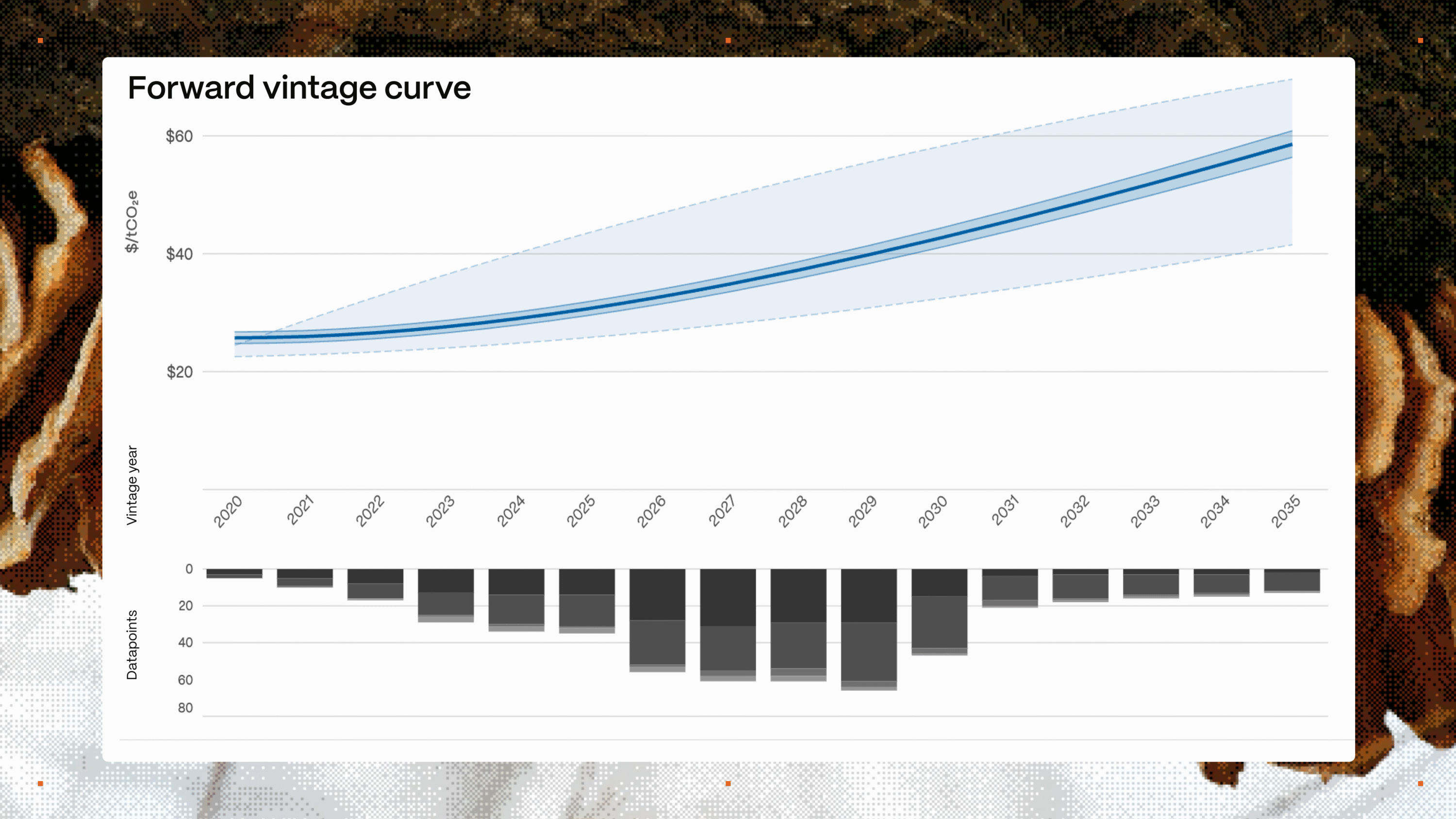
An example display of an Abatable vintage forward curve
Already rolled out to customers who have chosen to run their RFQ process through our platform, our curves have given buyers an invaluable tool for benchmarking bids against the wider market.
We’re already seeing the transformative impact of this data through our work with diverse market participants. Here are three examples of how our curves are being used today:
Case study 1: Strategic budgeting for a global tech leader
A global Japanese technology company, aiming for net zero by 2040, is currently building its carbon procurement strategy for the 2026–2035 period. It needed to secure approximately 100,000 tonnes of carbon dioxide removal (CDR) credits for a pilot phase while balancing a portfolio that is 90% nature-based and 10% high-durability.
To move forward, the team required granular pricing insights to build a directional budget and obtain board sign-off. By using Abatable’s vintage forward curves, they could definitively compare the trade-offs between nature-based solutions and more durable CDR technologies across different vintage years. This visibility into post-2025 pricing allowed them to evaluate the cost implications of increasing their high-durability share to 27% by 2040, providing the data-driven confidence needed for strategic planning.
Case study 2: Valuing a mining corporate’s carbon portfolio
A large mining company engaged Abatable to conduct a comprehensive valuation of its nature-based carbon credit portfolio. The company held 14 assets at various stages of maturity and was undergoing a strategic review of its project development holdings. It sought an independent, third-party market view to determine the financial value of its early-stage portfolio and identify potential co-investors.
We used our vintage forward curves to perform a net present value assessment and scenario analysis, projecting asset values through 2035 under base, conservative, and aggressive cases. This ‘ground-up’ valuation went beyond simple mark-to-market metrics, helping the client understand the premiums associated with its specific project methodologies and co-benefits.
Case study 3: Market benchmarking for traders
We also work with active carbon market participants, such as spot traders, who rely on real-time price signals for daily decision-making. These clients use our vintage forward curves to index their bid prices accurately. In a market often lacking true transparency, the curves are designed to provide a reliable, third-party benchmark derived from real transactions. This allows traders to quickly assess the fair market value of credits and efficiently set their bid levels, ensuring they’re competitive and grounded in current market reality.
Ultimately, the real benefit for these companies is that our curves are derived from real market offered prices and transaction data, in combination with our in-house multidisciplinary expertise and transactional experience.
While our vintage forward curves provide a higher-confidence tool compared to forecasts, they’re complementary rather than exclusive. Forecasts remain useful for identifying directional market trends through 2050. However, they often rely on uncertain demand and supply scenarios that can be inaccurate due to dynamic macroeconomic, regulatory, and policy factors, as well as environmental uncertainty. As such they may not reflect real market realities or the actual willingness to pay perceived by developers and suppliers.
By providing transparency grounded in actual market activity, we’re helping environmental market participants transact with greater confidence and build more resilient climate strategies.
To explore our vintage forward curves, head to the Abatable platform.