Authors

Contents
Find out how we can help you navigate environmental markets
Throughout this series, we have discussed and outlined the steps necessary to develop your science-aligned carbon procurement strategy from deciding how carbon credits can help you achieve your sustainability claims to developing your budget and getting buy-in from key internal stakeholders. In this article, we are going to break down how your impact agenda can help you identify the right project criteria and how to take a portfolio approach to carbon credit procurement.
Project types and how they map to sustainability claims
Companies may be restricted on which type of carbon credits they can focus on depending on their strategy and the claims they are looking to make. For example, if you are procuring credits solely to meet a net zero pledge, you will only be able to procure permanent removals (according to SBTi, ISO, UN Net Zero Expert Group). On the other hand, taking a beyond-value chain mitigation approach will provide greater flexibility around project type selection.
Impact approaches for your consideration
Once you understand whether there are any restrictions on which project types you can procure to be able to make a claim, here are some additional impact approaches you can consider:
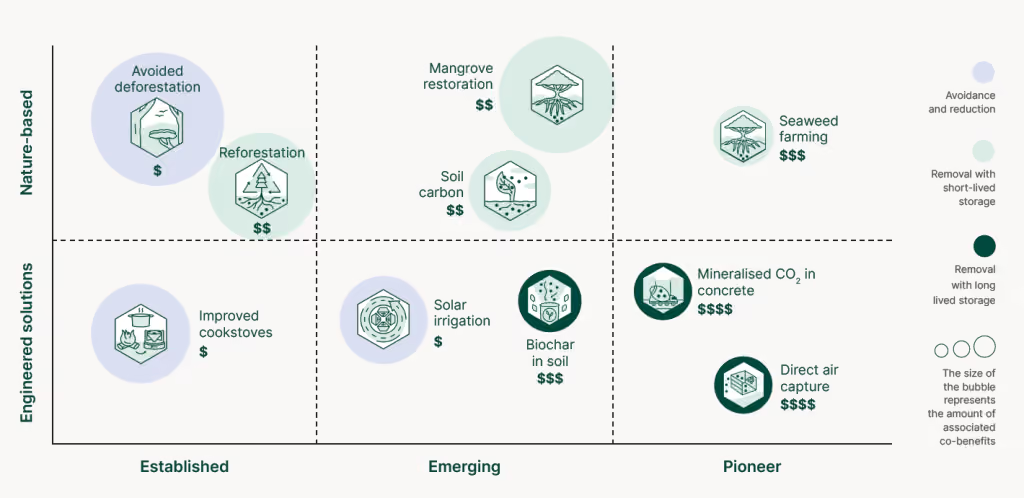
- Many or few co-benefits? Procurement preferences can be 'values-aligned' with a preference for projects aligned with the company’s corporate social responsibility agenda and/or specific sustainable development goals as co-benefits. What are the co-benefits that matter the most to your organisation?
- Nature vs engineered? Increasingly, corporates are considering a 'nature positive' approach and using beyond-value chain mitigation programs to invest in more established projects focused on the preservation and regeneration of natural ecosystems and biodiversity. Others prefer engineered solutions as it aligns with their own activities or views.
- Global or local? Often, companies wish to procure credits from projects close to their operations. This might impact the availability of projects and their price with projects developed in the Global South typically commanding lower prices.
- Established vs pioneering solutions? Is your company interested in contributing to derisking pioneering solutions and taking under-delivery risks or should you stick to established solutions because you have a claim you want to meet?
Take a portfolio approach
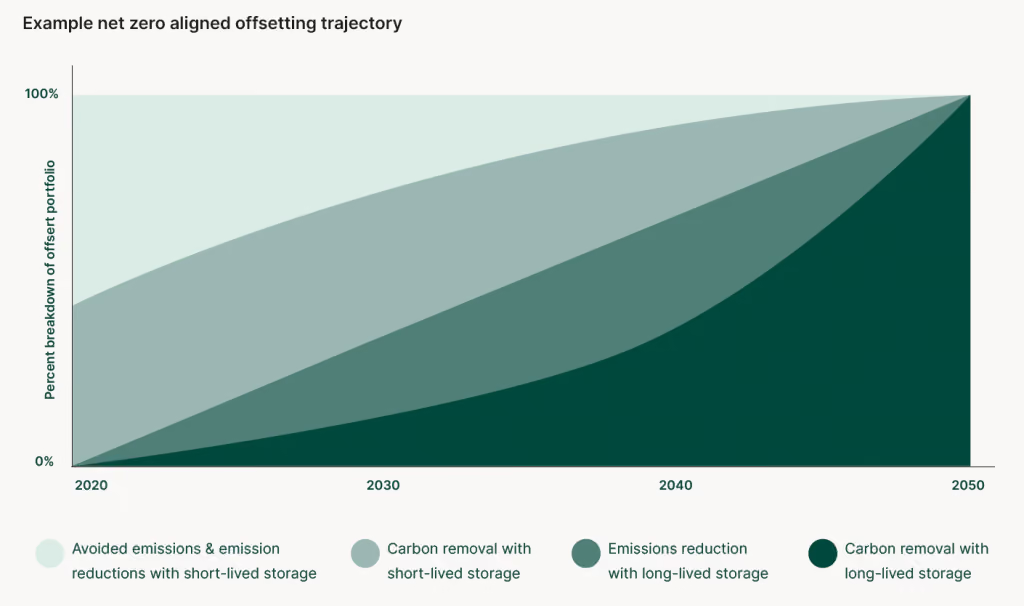
Once you have decided on the types of projects you want to support, we recommend taking a portfolio approach which evolves over time, as suggested by the Oxford Offsetting Principles. This is for three main reasons:
- Aligning your strategy with climate needs and urgent financing gaps,
- Enabling you to support project types with different risk profiles,
- Aligning your procurement efforts with reaching net zero.
In the short term, you may want to start your strategy by supporting projects which require urgent finance such as avoided deforestation, and gradually support solutions such as carbon dioxide removal. In the medium term, the mix of credits you purchase every year should be aligned with your voluntary commitments. For example, if you have a net zero commitment, you will want to shift the focus of your portfolio to permanent removal projects. Finally, in the longer term, you should aim to procure only carbon removal with long-lived storage.
Conclusion
In the last two articles of our carbon procurement series, we’ll discuss how you actually find and purchase carbon credits, how to determine if a credit or project is good or bad, and how to carry out your due diligence through monitoring and reporting.
Can’t wait? Grab our guide and watch our corresponding webinar on Youtube.