Authors



Contents
Find out how we can help you navigate environmental markets
The Abatable platform has been updated with enhanced carbon market buyer data and new ways to visualise it. We’ve built some interactive charts to show how different sectors are approaching the market today as a gateway into the full dataset, and to ask what it means for companies using carbon markets today.
The carbon market works by allowing companies to purchase emissions reductions or removals that happened elsewhere to support environmental action outside of (or increasingly within) their value chains. Once the emissions reduction or removal activity occurs, and the credit is issued into the market, it is only when a company retires the credit that the climate benefit is locked in – the credit can no longer be resold, traded or reused.
But how are companies in different sectors retiring credits in the market, and how are they approaching to meet their climate goals?
We’ve broken it down in a series of interactive charts to allow you to explore the data and what it means for your carbon market strategy.
The state of play
Companies have retired a total of 1.5bn tonnes of carbon dioxide equivalent (CO2e) from the market. That represents 1.5bn tonnes of CO2e – around 4% of annual emissions of CO2 – that have been avoided or removed from that atmosphere thanks to carbon markets.
Abatable’s buyer and retirement data now tracks over 32,600 buyers in the VCM. Since 2016, the buyers we track have retired an increasing amount of credits, with retirements reaching around 180mn tonnes in 2022 and remaining at this level since.
Here we dive into the data a bit more with a series of interactive charts.
The number of buyers in the market is increasing, and they are using higher-quality credits
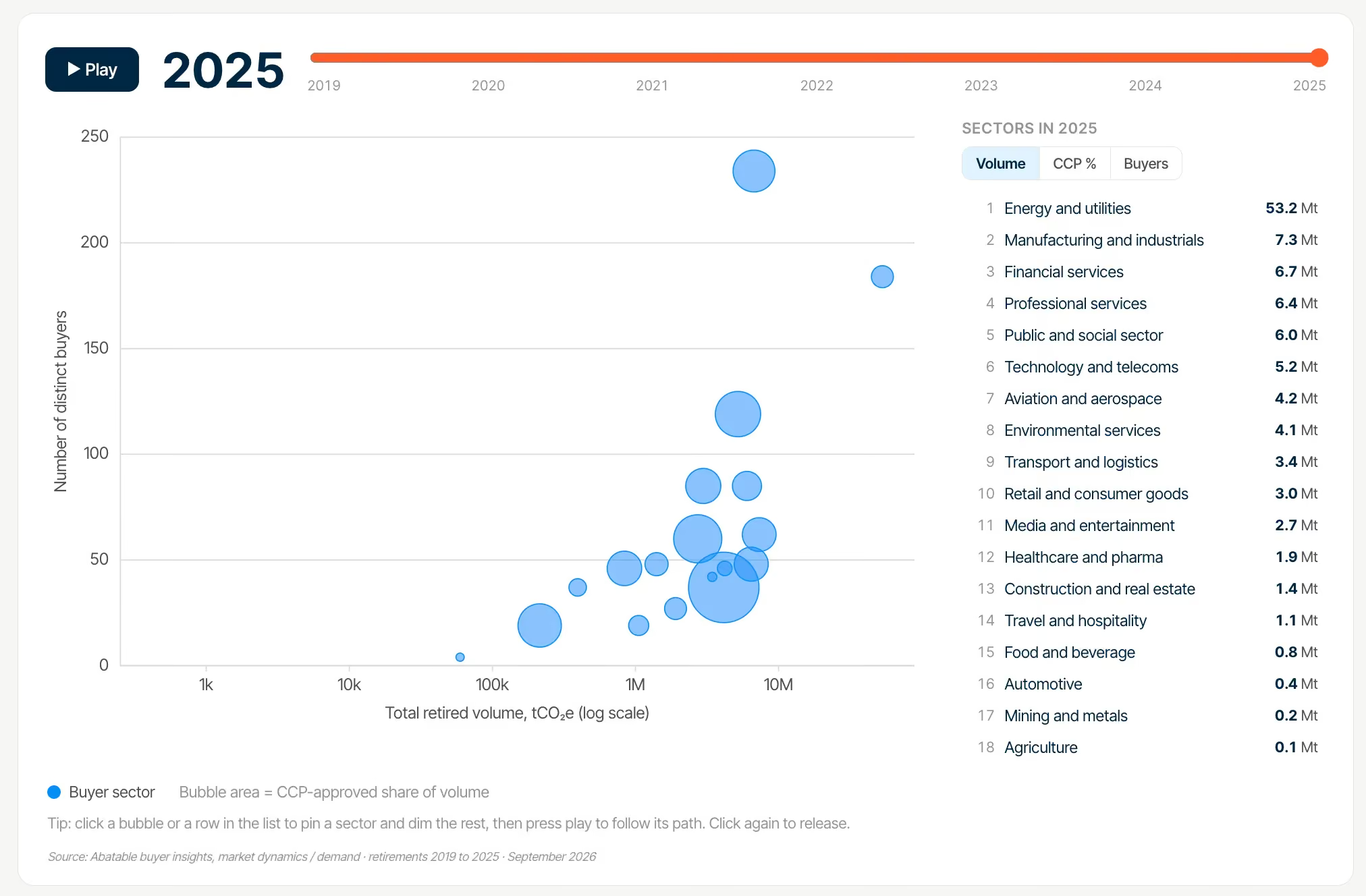
Number of buyers
As total retirements increase from 2019 to reach a plateaus of around 180mn tonnes from 2022 onwards, underneath this the number of named buyers in the market are increasing. This can be seen in the chart as the bubbles gradually move higher as you cycle through the years.
As overall volumes have remained static, this means the average buyer is retiring less – roughly 30,000 tonnes per named buyer in 2022 against 21,000 in 2025.
Retirement events also rose from around 52,800 in 2021 to 75,300 in 2025, with average retirements shrinking from about 3,350 tonnes to 2,280.
Credit integrity
Of note is the environmental services sector, which moved to 80% CCP-approved retirements.
On average, CCP-approved retirements moved from 4% to 12% in 2025.
There are a greater number of transactions in the market. So buyers are retiring smaller volumes more regularly. This indicates a leaner procurement operation with more ‘always on’ procurement.
Some sectors are moving to quality faster than others.
What does this mean for buyers?
The increased number of retirement events reflects growing sophistication in the market, as buyers move from fewer bulky retirements to something like a rolling programme.
What’s more, portfolios are becoming more diversified. Distinct projects retired against went from 1,649 in 2021 to 2,915 in 2025, a 77% rise on flat volume. This means that portfolio construction considerations and due diligence become increasingly important when the market is looking across a wider array of options.
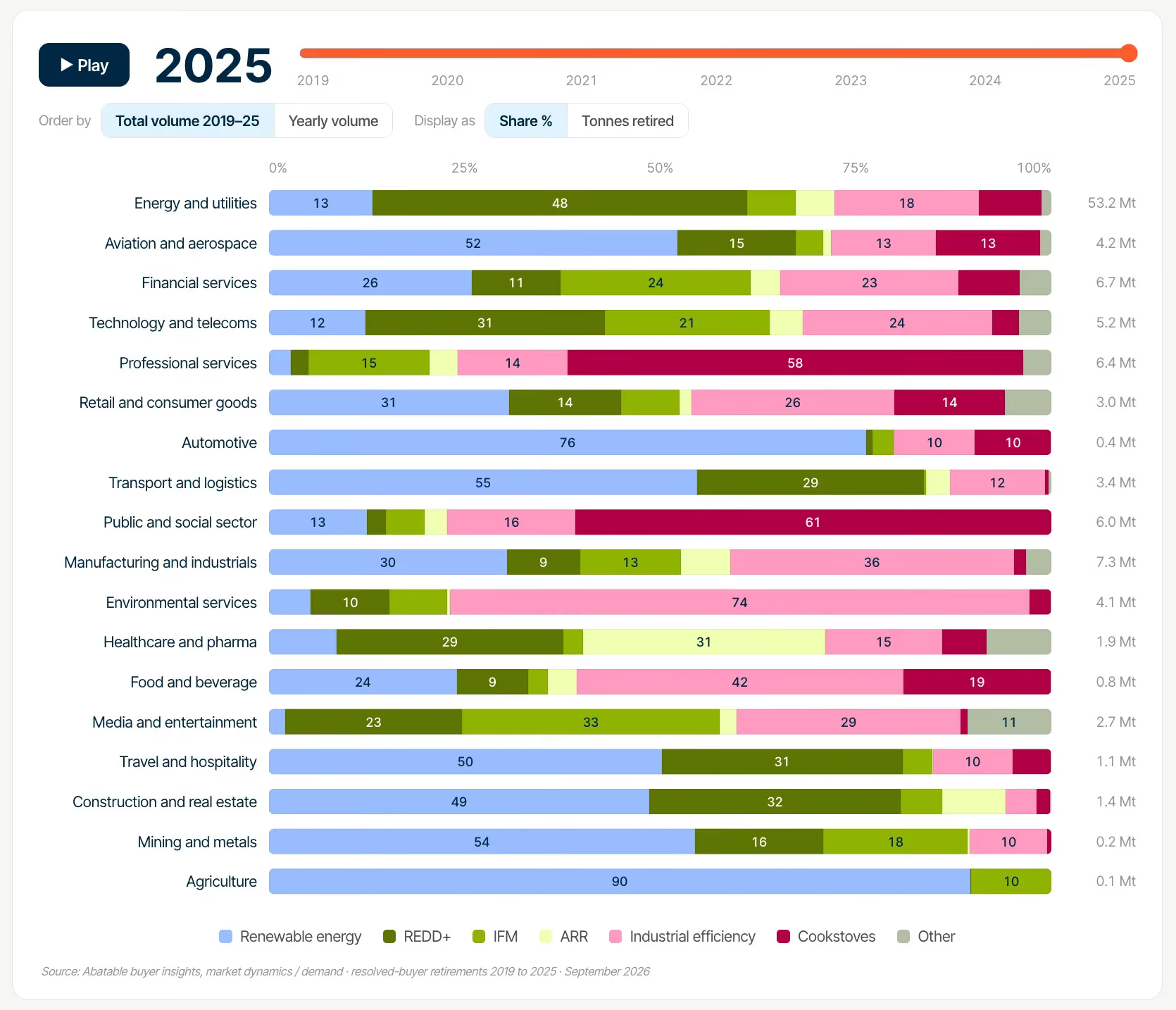
Buyers seek an array of different project types, but REDD+ and renewable energy retirements are declining
What does this mean for buyers?
Bring in the compliance angle here - companies are competing against compliance markets and so increased demand will mean prices will increase. Good to lock in supply now.
Conclusion
As guidance and standards change, corporate drivers for decarbonisation shift with other business priorities, and policies impact how carbon credits can be used against a company’s carbon compliance obligations, the voluntary carbon market is constantly shifting.
As the data indicates, the way companies approach the market continues to evolve year-on-year. On a broad basis, some themes are evident:
- Renewable energy and REDD+ credit retirements have been shrinking as buyers look towards additive project types and await new higher-integrity methodologies.
- The number of buyers in the market is growing year-on-year, and more companies are retiring CCP-approved credits as quality improves across the sector.
- One more takeaway here
All the data displayed in this piece are fully explorable in the Abatable platform. With an XXXX account, users can further dive into the data by sector, and can also discover more insights by project type and by buyer.
Our data exists on a buyer level for 32,600+ buyers, and users can explore far more by buyer, including:
- Retirement history by project type and average price paid per tonne
- Credit spend against financial performance
- Science-based target status
- Quarterly retirement patterns
- Which suppliers the company is purchasing from
CTA block: Create an account today
If you would like to explore how Abatable’s procurement solutions can help you balance cost, risk and impact when purchasing carbon credits, get in touch.