Authors

Contents
Find out how we can help you navigate environmental markets
Running four live CORSIA procurements at once gave us an unusually clear read on where prices, demand, and supply readiness sit as the scheme's First Phase gets under way.
Between July and August 2026, Abatable ran four CORSIA procurement events for airlines looking to source CORSIA eligible units for the scheme's First Phase. Here we outlined what we learned and why it matters for airlines and suppliers of CORSIA Emission Eligible Units (CEEUs).
A market that repriced mid-summer
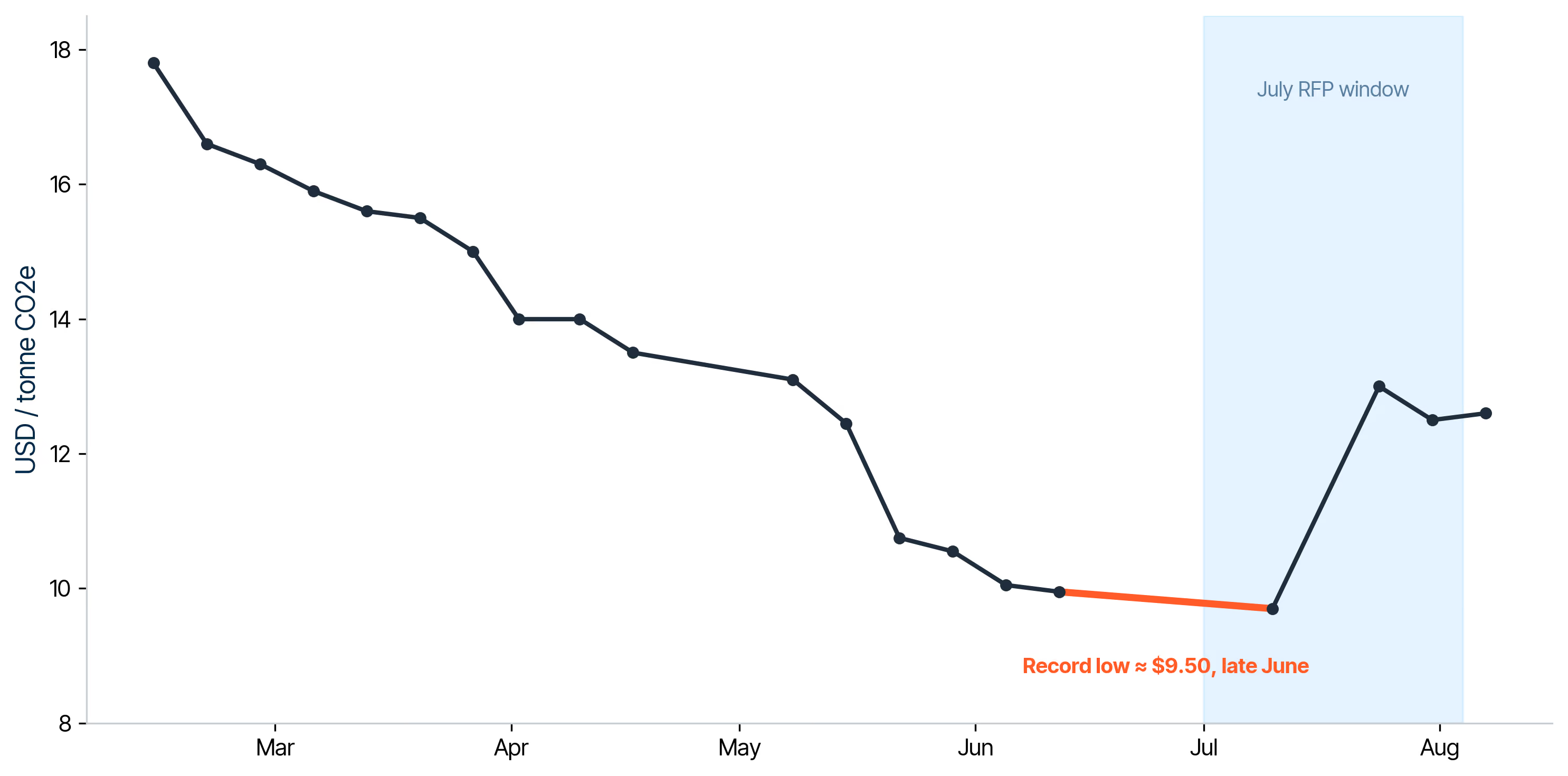
Our RFP events ran as the CORSIA market went through a sharp repricing moment. After CORSIA reference contracts reached a floor price around US$9.50 per CEEU in late June, their price increased substantially in July to around US$13 per CEEU before settling near US$12.50 to 12.60, driven by the European Commission announcement on 17 July around CORSIA treatment in the EU ETS reform proposal.
The market repricing showed the importance of regulatory certainty on the scheme.
Demand is real, and the marketed supply is deep
As CORSIA is a nascent market, the four RFPs draw significant attention from market participants, attracting 38 different suppliers that put offers representing nearly 29 times the qualified demand sought by airlines.
The response indicates there is sufficient supply for the market's current demand. It also highlights the staggered purchasing approach followed by airlines, as they were all sourcing partial volumes rather than covering their whole CORSIA obligation in one move.
Readiness is the real dividing line
Full CORSIA eligibility of a unit is not the same as CORSIA readiness. What separated offers in our RFP events was how far an offer had travelled towards obtaining a CORSIA eligible label for its units. As per International Civil Aviation Organization (ICAO) rules, a unit can only become CORSIA eligible and be labelled as such in a registry if it holds a Letter of Authorisation from the host country for use of the unit towards CORSIA, and if a corresponding adjustment for the unit is reflected in country's reporting to the UNFCCC. If this is missing, then the unit needs to be covered by an insurance policy that covers for improper accounting and revocation of the authorisation.
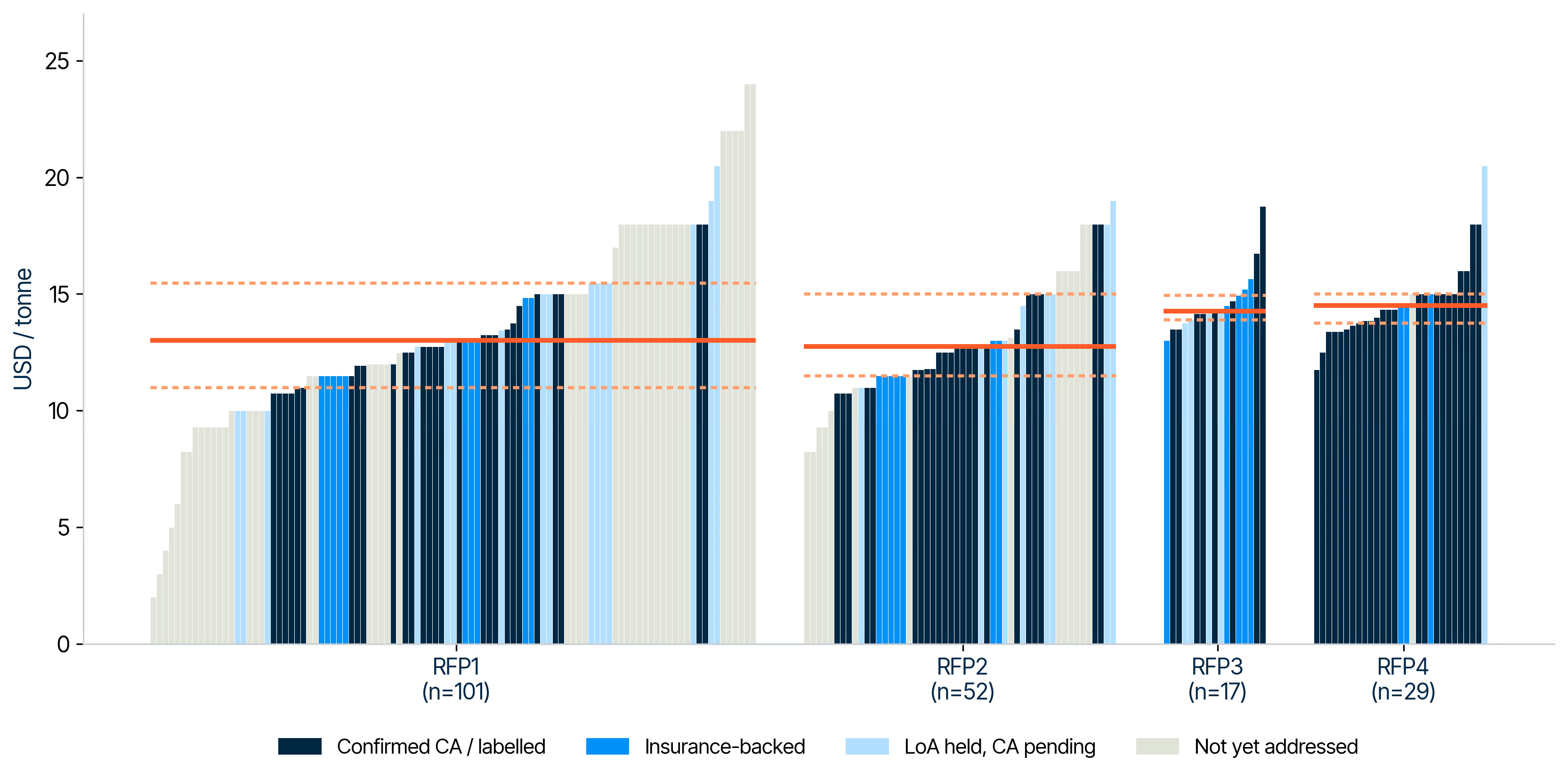
Nearly 1 in 3 offers (36 out of 119) lacked all of these steps; however, the remaining had made progress, with 63 offers showing a CORSIA label for their units, supported either by a corresponding adjustment (49) or an insurance policy (14). What is more prominent is the emerging pipeline of projects coming for the first time to a CORSIA procurement, such as those from Ethiopia and Turkey. CORSIA supply is evolving and expanding, with an increasing number of options that may be ready, but not yet fully eligible.

Why our pricing view is differentiated
Pricing is one of the most important pieces of information in the CORSIA market.
Standardised contracts offered by commodities houses and their prices provide a market reference for wholesale trading of CEEUs; however, these reference prices represent a certain type of wholesale transaction and would not necessarily be the price paid by an airline for its CEEUs.
CORSIA procurements, such as the four RFPs run by Abatable, bring a real-life range of prices in the market, which reflects what suppliers are offering their units for and what airlines are willing to pay for a CCEU or for units in the process of obtaining their label.
This type of price discovery from our four RFPs also indicate the existing price premium between labeled and non-labeled units.
A refreshed supply and demand outlook on the Abatable platform
Alongside this pricing view, we've recently refreshed our forecast of CORSIA-eligible supply and demand, which airlines, suppliers, and investors can consult directly in the Abatable platform. Our CORSIA module lets you explore different growth scenarios, break demand and supply down by country and project type, and look at requirements across both the First and Second Phases of the scheme. Paired with our procurement-derived pricing insights, we built it to help you plan sourcing and origination with a clearer sense of where the market is heading, rather than where it has been.
Working with us
For airlines, we can help you run a competitive, well-structured CORSIA procurement and price it against what the market is really doing. For suppliers, we open access through our network to airline mandates you may not otherwise see. To learn more about our CORSIA module, our pricing insights, or upcoming mandates, get in touch with the Abatable team.
Note on sources
We drew market figures from Abatable's four CORSIA Requests for Proposals, run between 1 July and 4 August 2026, aggregated and anonymised. The regulatory reference is the European Commission's proposal to revise the EU Emissions Trading System, published 17 July 2026. CORSIA First Phase spot price levels reflect published market assessments over the same period.